- Licensed & insured · Inspection-led home protection
Pottstown · Douglassville · Surrounding Pennsylvania communities
An attic restoration is more than adding insulation. We sequence the work so contamination and access problems are handled before new material goes in: protect the home, remove damaged insulation, HEPA-clean, sanitize, air-seal accessible penetrations, correct ventilation details, and install insulation to the written target.
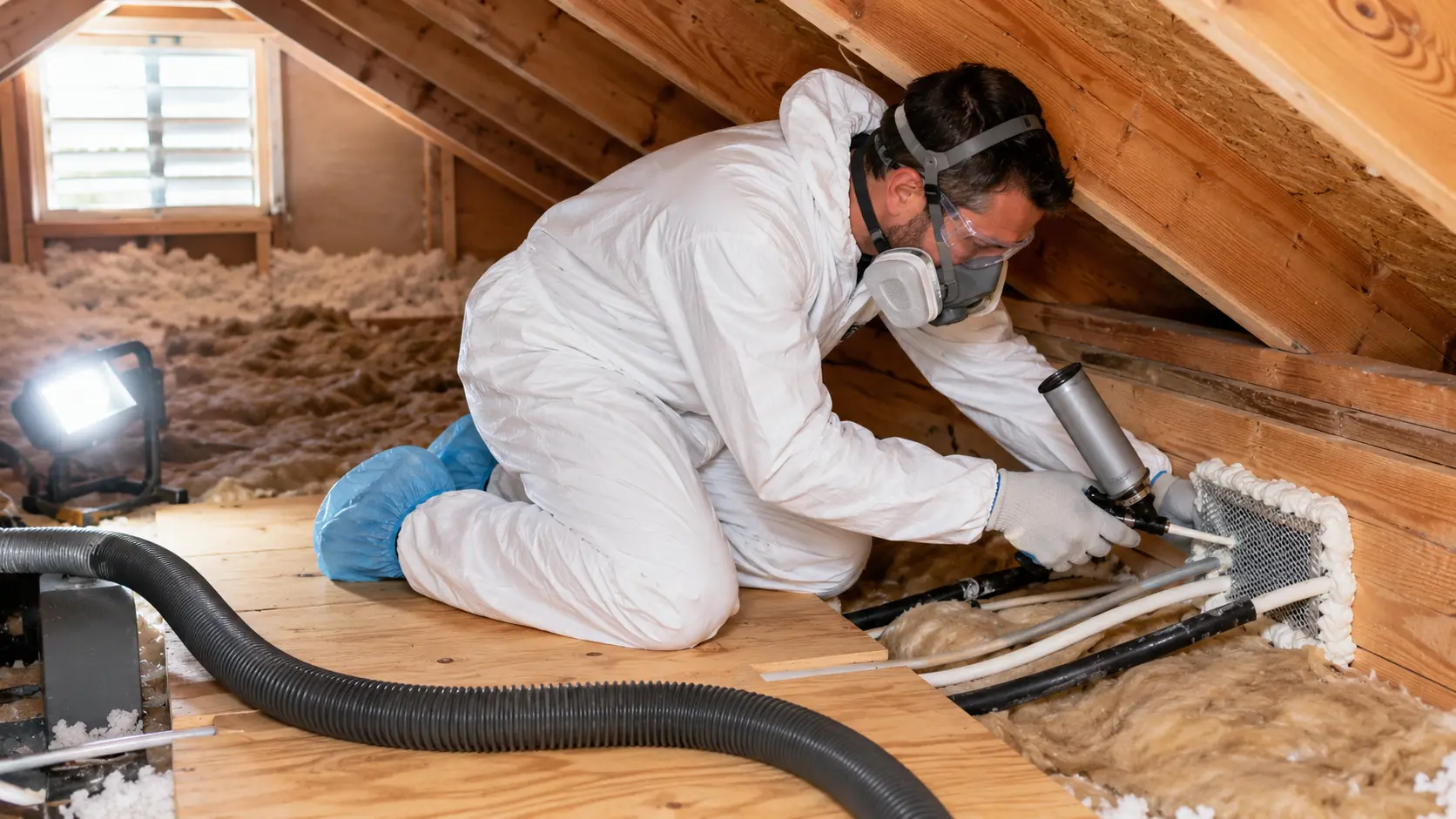
A clean, documented reset for the attic—not a cosmetic top-off over an unresolved problem.
The inspection determines which items belong in your proposal. The agreement defines materials, access, frequency, limitations, and warranty terms before work begins.
Containment, floor protection, equipment paths, and dust controls are set before removal begins.
Affected insulation and debris are extracted according to the agreed scope and disposed of appropriately.
Accessible surfaces are HEPA-cleaned and treated; entry points, air leaks, and ventilation details are addressed before installation.
New insulation is installed evenly to the specified coverage and depth, with critical access and ventilation zones preserved.
Final photos and job notes record the completed conditions and any remaining limitations.
Sometimes. A top-off can be appropriate when existing material is dry, clean, evenly distributed, and free of unresolved pest or moisture concerns. Contaminated or damaged insulation should not simply be covered.
Exclusion is coordinated with restoration but listed separately or as a combined written scope. Open entry points should be corrected before the attic is considered fully restored.
TAP is a cellulose insulation that provides thermal and acoustical performance and includes an EPA-registered pest-control component. Installation and claims are handled according to its label and project specifications.
Targeted rim-joist and attic air sealing coordinated with exclusion and insulation work.
Make difficult lower-level spaces accessible, sanitary, and ready for repair or pest prevention.